Our state economy is in the tank, like pretty much everyone else's, which means that the state government's in financial trouble. Our Governor (with the nickname that people love to hate on) proposed a series of spending cuts and other measures to help us limp through, including phasing out some state agencies and programs. One target for phasing out is Idaho Public Television, and proposing this apparently ranks up there with atrocities like smearing tomato sauce on the Mona Lisa. From all the hue and cry I've read about this, you'd think that most of the state watches IPTV at least 50% of the time--and I don't need to consult Neilsen results to know that's not the case.*
Adam Graham, over at the Idaho Press Tribune's blog "Give Me Liberty," outlined eight talking points defending Otter's proposal, which pretty much makes the case. I'd quibble over the order he gives them, his number 7, should be number 1.
It is no more the job of the government of Idaho to ensure that that IPTV is on the air in Burley than it is for the state of Idaho to ensure there's an opera house and disco in Burley.That's the whole point, isn't it? It's not the government's job to provide a television station to provide educational programming (for young or old), entertainment, and biased (or unbiased, for that matter) news. In fact, it's downright dangerous for the state to assume that role, ignoring the dollars and cents of it all.
The fact is, Nickelodeon and other cable channels oriented towards kids, libraries, Netflix, BBCAmerica, 24-hour news channels, CSPAN, etc. do everything that Public Television does--and do it more efficiently, effectively and conveniently. We ought to let them do that, and let the state spend it's money where it's needed.
Sadly, it appears that the Joint Finance-Appropriations Committee isn't going along with the idea. I just don't get it.
* Actually, last week in a story on KTVB, Mark Johnson claimed that southern Idaho was one of the best audiences for The Jay Leno Show, which might say more about the State's troubles than anything.
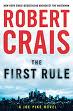 Robert B. Parker did many things to revolutionize as well as revitalize the hardboiled detective novel. One of those things was to introduce a character who would work alongside the detective/detectives and handle the more violent/thuggish aspects of the story, as well as watching the back of those doing the sleuthing. These characters do a lot of their work "offscreen", keeping the more reputable portion of the duo free from the stain of their violence; they're mysterious, usually not given to talking a lot, and tend to wear sunglasses more often than necessary. For Parker it was Hawk, for Robert Crais, it's Joe Pike.
  With the third installment of many series, you can see the author settling into the world he's creating and while there are hints of it, Stout's been pretty at home since Day 1--he just adjusts the furniture a bit in The Rubber Band.
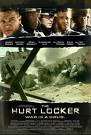 A lot of movies will open with an epigraph (from a poem by Chris Hedges) to set the tone, mood, explain the title, etc. with The Hurt Locker the epigraph (quoted above) is more of a thesis, particularly as the text begins to fade out, emphasizing the words "war is a drug." Having stated that, it spends the next 127 minutes demonstrating how it can be a drug. And it does so brilliantly.
 Robert B. Parker, author of almost 70 books, died yesterday morning. When I read the news this morning, I was stunned. I knew he was getting up in years, but I just couldn't wrap my head around the idea. A few moments later I was hit by a powerful sense of loss -- it was like I'd lost a friend.
 The biggest fear I had last week (and this should tell you something about the a-perilous nature of my life) was that, despite my anticipation, despite my giddiness at the prospect of its return topped off with the unexpected gift of the Season 2 set from TLomL (squee!),
  I've been watching (read: obsessing over) the BBC's Wire in the Blood over the last couple of weeks, and but haven't been terribly inclined to read the source material -- which is more than a little odd for me, I normally have to immerse myself in that kind of thing. Something about the stories and the way they were being told kept me from it. On the whole, I'm not a big serial killer fiction kind of guy--I'll dip into that type of thing occasionally, but generally if it's from an author I follow (I'm a little more inclined to handle the subject on TV than I am in movies or in print, but even then...)It was an aside in a blog entry by
  Olson's focus isn't on the case, it's not about the mystery for her. This is Annie's story--it's about what happens to her (and those around her) while she investigates/reports on this case.